
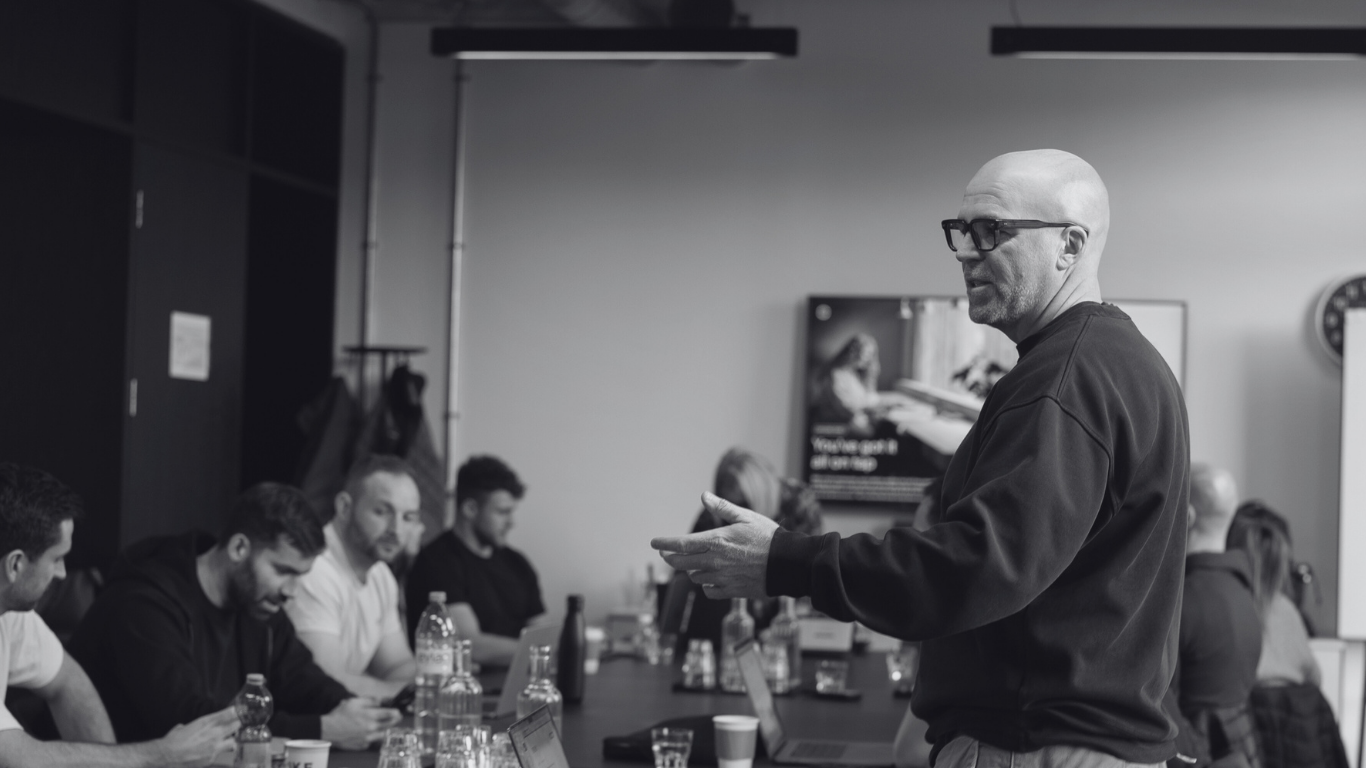
JC on what changes when a business grows, why moving fast becomes a liability, and the leadership mistakes he’s still learning to live with.
At some point this year, Foundry will become a 10-site business. A business I’m leading.
I don’t have an MBA or any formal leadership training, so what I know now is the product of mistakes made and lessons learned along the way.
Here are a few that stuck.
Lesson 1: Leadership isn’t about speed
At a certain point, leadership is no longer just about moving fast. One of the mistakes I’ve made over time is trying to move really quickly. Having ideas, driving things forward and trying to implement at pace.
You just end up leaving people behind. People get exhausted. You trip them up all the time.
You end up asking, why have we done this? Or saying this should have been landed better. And actually, some of the things we were doing didn’t need to move at that pace, or even in that direction, at the same time.
I’ve definitely made the mistake of making people feel like they can’t keep up. I’m naturally high-drive, high-energy.
I’m older, but there’s that saying: you can get old, just don’t let the old man in.
I’m definitely older, but I’m no less energised than I was in my twenties. I’ve still got that drive and ambition but not everybody wants to move at that pace.
Lesson 2: Not everyone wants to run through a brick wall
Another learning is that some people just want to come to work and do a good job. I didn’t really get that.
My mindset used to be, if I’m messaging you on a Saturday, I expect you to do the extra bits. Now we’re getting more people saying, I’m really good at my job. I’ll give you my 40 hours a week. I’ll go above and beyond during those hours. I’ll cover when you need me. But I want to switch off outside that.
I used to think I didn’t want to hang around with those people. That was my definition of a C team player. Over time, you realise you need those people.
You can’t have everybody at the front trying to cross the finish line together.
We burned a couple of people who just couldn’t keep up. I battered them without realising it, and they burned out.
Lesson 3: Ideas don’t pay the bills
There was a time in the past when we stopped implementing. What I realised was that we had all these ideas. I went into a management meeting and said, here are five things we think we could do this year that would make us a better business. One of them was this idea of table to floor. We’ve got to get better at taking the things we talk about around the table and actually putting them onto the gym floor.
We don’t get paid for ideas. We get paid for landing ships. And we weren’t landing ships.
That wasn’t because people weren’t good enough. It was because there was too much. We were being unrealistic about timescales and how things could land. The problem was with me, not with the collective.
I had to ask myself: do we need to do all of this now? What are the one or two things that will actually change the position of the business in this period of time? Everything else can wait.
Lesson 4: You’re not responsible for everything
We’re about to go into double figures for gym sites. For the record, I don’t have an MBA, and I’ve had no formal leadership training. I was the school captain and wore the armband in sport. I don’t really understand the process of leadership. So anything I say, I know I’m probably wrong.
But the most important thing I’ve realised is that I’m not responsible for everything. My definition of leadership used to be taking 100 percent accountability for everything. I was in every conversation. One minute I’m reading a member email from Barbara complaining about a timetable change. She’s been here seven years, how dare we, the business isn’t what it used to be. The next minute I’m on the phone to an investor who doesn’t agree with our strapline. Then I’m recruiting, leading product conversations, taking responsibility for absolutely everything.
That’s not my job.
My job is to make sure the people in their roles are taking responsibility, and that they have the resources, infrastructure and skill sets to do their jobs properly.
Then I need to let them get on with it and back off.
I still find myself getting lonely, agitated, feeling trapped in the business. Then I think everyone else is an idiot. But the truth is, that’s on me. I’m in everyone’s business, in every conversation.
You’ve just got to get out of the way. I still do it. I can’t help myself. That’s been the biggest change.
Lesson 5: You can’t be hands-on everywhere
You can’t be hands-on in everything once you’ve got more than one site.
You’ve got to deal with the crocodile closest to the canoe.
Everything could be fixed. Everything could be better. Everything feels urgent. But if everything’s urgent, nothing’s urgent.
Different areas of the business need attention at different times. Sometimes it’s people in certain roles. Sometimes it’s product. Sometimes it’s membership structure. Right now, it’s acquisition. Marketing and front-end acquisition are being tipped on their head for everyone, so we’re all trying to work out what the new world looks like.
You can’t do everything.
At the start of this quarter, I had a conversation with our head of operations. I said, you’ve been on board for six months. You’re taking the reins. These are your KPIs. These are your areas of responsibility. Here’s the infrastructure around you. I’ll support you, but you’re responsible for those outcomes.
I need to focus on raising cash, acquisitions, and the commercial and marketing side of the business. That’s where I add the most value.
Lesson 6: Learn to let go of decisions you think you’re right about
The most uncomfortable development for me as a leader has been letting other people make decisions. I hate it.
I was chair of a football club for six years. A thousand kids, biggest club in the southeast. I grew it from 200 kids to a thousand kids with one other person during COVID. Then you need a committee. Suddenly I’m listening to people’s opinions and thinking, you haven’t got a clue.
I realised I’m much more of a dictator than I’d like to admit. I think most people are daft. I’m pretty sure I’m right most of the time. And I’ve had to accept that none of that is true.
So I’ve had to relinquish decision-making. Sometimes I know it’s not going to get the outcome I want. I can see it playing out. But you have to let it happen.
I ask myself: what’s the opportunity cost?
Is it time and distraction? Probably.
Is it going to materially damage the business? Probably not.
So you go through the process. That’s really difficult when you think you’re right. But that’s leadership at this stage.
My top three gym-owner leadership qualities
Know yourself
Number one is self-insight. You need to know yourself. It’s so important it could be one, two and three. And I don’t mean the narcissistic version of self-awareness. Not optimisation routines or work-life balance rhetoric. I mean genuinely understanding who you are, how you come across, how people experience you. If you understand yourself, you can have much more empathy for others. Everything else follows from that.
Live up to the role
You also need main character energy. You cannot lead in this sector without it. Whether you’re a coach, a manager, or leading a business, you need that presence and I think it’s largely innate.
Have a plan
Finally, you need a plan. A vision that everyone can get behind. But most of it comes back to you and how you conduct yourself.